
Stress & Recovery Learning Path
The Stress & Recovery Learning Path helps growers slow down, stabilize stressed plants, and rebuild safer growing conditions after setbacks. It is designed to reduce overcorrection, protect roots, and restore steadier decision-making before stronger action is taken.
If a plant is stressed, your first job is not acceleration. Your first job is stabilization.
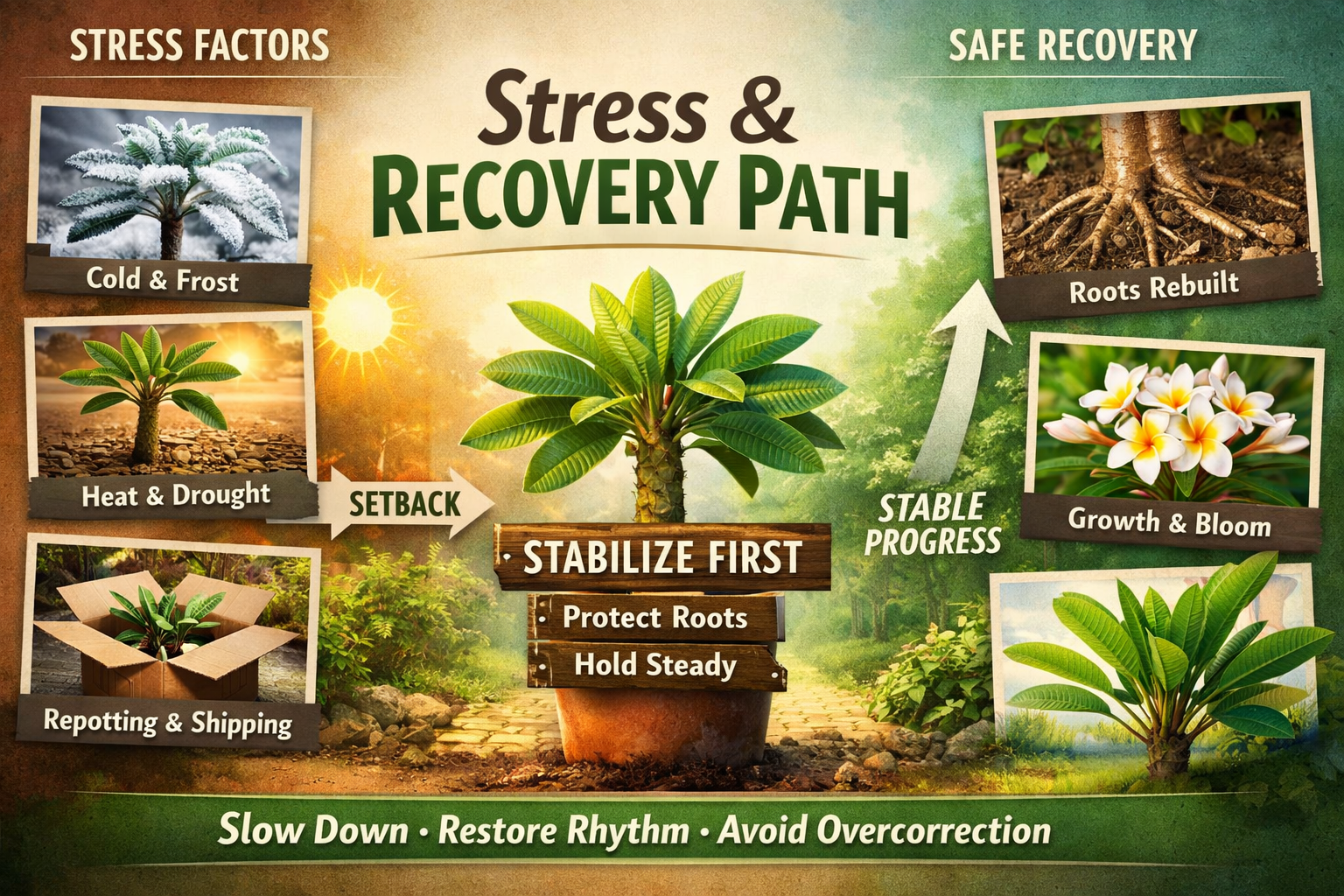
What This Path Does
Most recovery mistakes happen when a stressed plant is pushed too hard, too soon. More water, more fertilizer, or more products do not automatically equal recovery. This path helps restore rhythm, protect roots, and create steadier conditions long enough to see what is actually improving.
Best for
Cold stress, frost injury, heat stress, drought swings, sunburn, shipping stress, transplant shock, and sudden environmental change.
Main outcomes
Better stabilization, less overreaction, stronger recovery sequencing, and safer decisions about what should happen next.
What it avoids
Pushing growth too early, stacking inputs, confusing symptoms with recovery signals, and creating a second problem while trying to solve the first.
A stressed plant often needs fewer new variables, not more. Better recovery starts when the setup becomes more stable and easier to read.
The Stress & Recovery Route
This path is designed to help growers move in a safer order when plants are under pressure.
Step 1 — Stabilize the conditions
Reduce avoidable stress and keep the plant easier to read before trying stronger corrective action.
Step 2 — Recheck the phase fit
Some stressed plants still need earlier-phase stability work before later diagnosis or advanced correction becomes appropriate.
Step 3 — Move into recovery and advanced judgment
When the plant truly needs diagnosis, recovery planning, and more advanced correction, Phase V becomes the right public route.
What Recovery Usually Needs First
Recovery is usually built from calmer conditions and clearer judgment, not from adding more force.
Stability
Stable light, stable watering rhythm, stable root-zone conditions, and reduced disturbance help the plant recover more predictably.
Observation
Recovery decisions are better when the plant’s actual signals are watched over time instead of guessed at once.
Restraint
Many stressed plants improve when overcorrection stops. Recovery often becomes clearer when fewer variables are moving.
What This Path Is Not
This path is a public routing page. It is not a treatment page and it is not permission to skip diagnostic discipline.
Not a product-first page
Recovery does not begin with collecting products. It begins with reducing extra stress and clarifying the next safe move.
Not a shortcut around earlier phases
Some plants that look like Phase V cases still need earlier-phase stabilization first.
Not the purchase page
This path helps you choose the route. The Course Guide explains the course. The product page is where purchase happens.
Use it to stabilize conditions, protect the plant, and choose the next recovery step with better limits and better clarity.