
Diagnostics Visuals
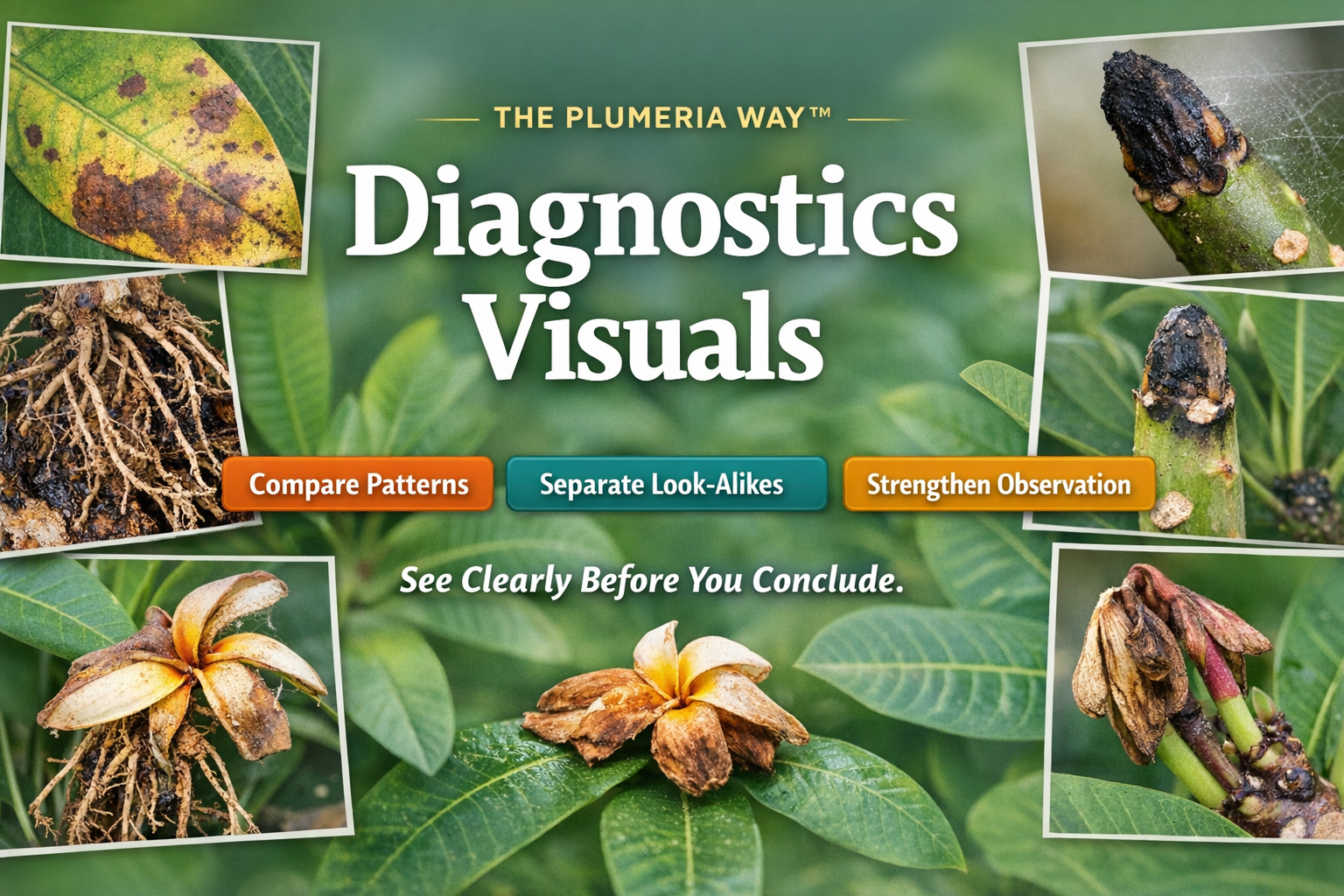
Diagnostics begins with learning how to see clearly. The Visual Library Diagnostics page is built to help growers compare patterns, recognize symptom types, and improve observation before moving into conclusions, products, or treatment decisions.
What This Visual Library Page Is For
Many plumeria problems look similar at first glance. Yellowing, spotting, curling, branch tip damage, softening, decline, and poor performance can come from very different causes. This page is designed to organize diagnostic visuals in a way that helps growers slow down, compare what they are seeing, and sort symptoms into more useful categories.
Compare Symptom Patterns
Use images to compare leaf symptoms, stem changes, rooting concerns, bloom failure, environmental injury, and stress responses side by side.
Separate Look-Alikes
Some issues appear similar but require different responses. Visual comparison helps reduce rushed assumptions and supports better diagnostic discipline.
Strengthen Observation Skills
The goal is not just to identify damage. It is to build the habit of reading the plant, the pattern, and the growing context more accurately.
Suggested Diagnostic Visual Categories
This page works best when visuals are grouped by symptom type and decision pattern rather than by random photo collection alone. Organizing the images this way makes the page more useful as a diagnostic reference.
Leaf and Surface Symptoms
- Yellowing and chlorosis patterns
- Leaf spots, lesions, and blotching
- Curling, distortion, and edge damage
- Rust-like symptoms and surface changes
- Seasonal leaf drop vs. abnormal decline
Stem, Tip, and Structural Symptoms
Rooting and Establishment Symptoms
- Healthy rooting vs. stalled rooting
- Transplant shock patterns
- Overwatering and poor dry-down signals
- Container stress indicators
- Early decline during establishment
Bloom and Growth Performance
How to Use This Page
The Diagnostics visual library should help growers move from seeing to sorting. It is not meant to encourage instant conclusions from one photo alone. Visual references are strongest when they are used with growing context, recent care history, and observation over time.
1. Match the Pattern
Start by finding the closest visual match for what the plant is showing right now, without forcing a conclusion too early.
2. Check the Context
Compare the image pattern against watering, weather, light, rooting status, season, and any recent changes in care or environment.
3. Choose the Next Step Carefully
Use the visual comparison to narrow possibilities, then move into observation, stabilization, or targeted action in the correct order.
Recommended Page Sections
If you are building this page out over time, these content blocks will help keep it useful, organized, and easy to expand.
Symptom Galleries
Group images into symptom-based galleries so growers can compare similar-looking issues in one place.
Look-Alike Comparisons
Include side-by-side comparisons for problems that are commonly confused, such as stress vs. disease or seasonal change vs. decline.
Next-Step Links
Link each image group to related diagnostic, stress, disease, pest, or treatment resources so the page becomes part of a larger decision system.
Related Resources
Diagnostics becomes more accurate when visuals connect to structured learning and decision tools. These sections support that process.
Diagnostic Field Books
Use the D-Series to strengthen your ability to interpret what the plant is showing and what should happen next.
Stress & Recovery
Many diagnostic situations become clearer when the plant is stabilized before escalation.
Treatments
Move into treatment decisions after observation and pattern recognition are more firmly established.
See More Clearly Before You Act
Better diagnosis starts with better observation. When growers learn to recognize patterns more accurately, they make calmer decisions and avoid unnecessary escalation.
View Visual Library Start Here