
“`html
THE PLUMERIA WAY™ LEARNING SYSTEM
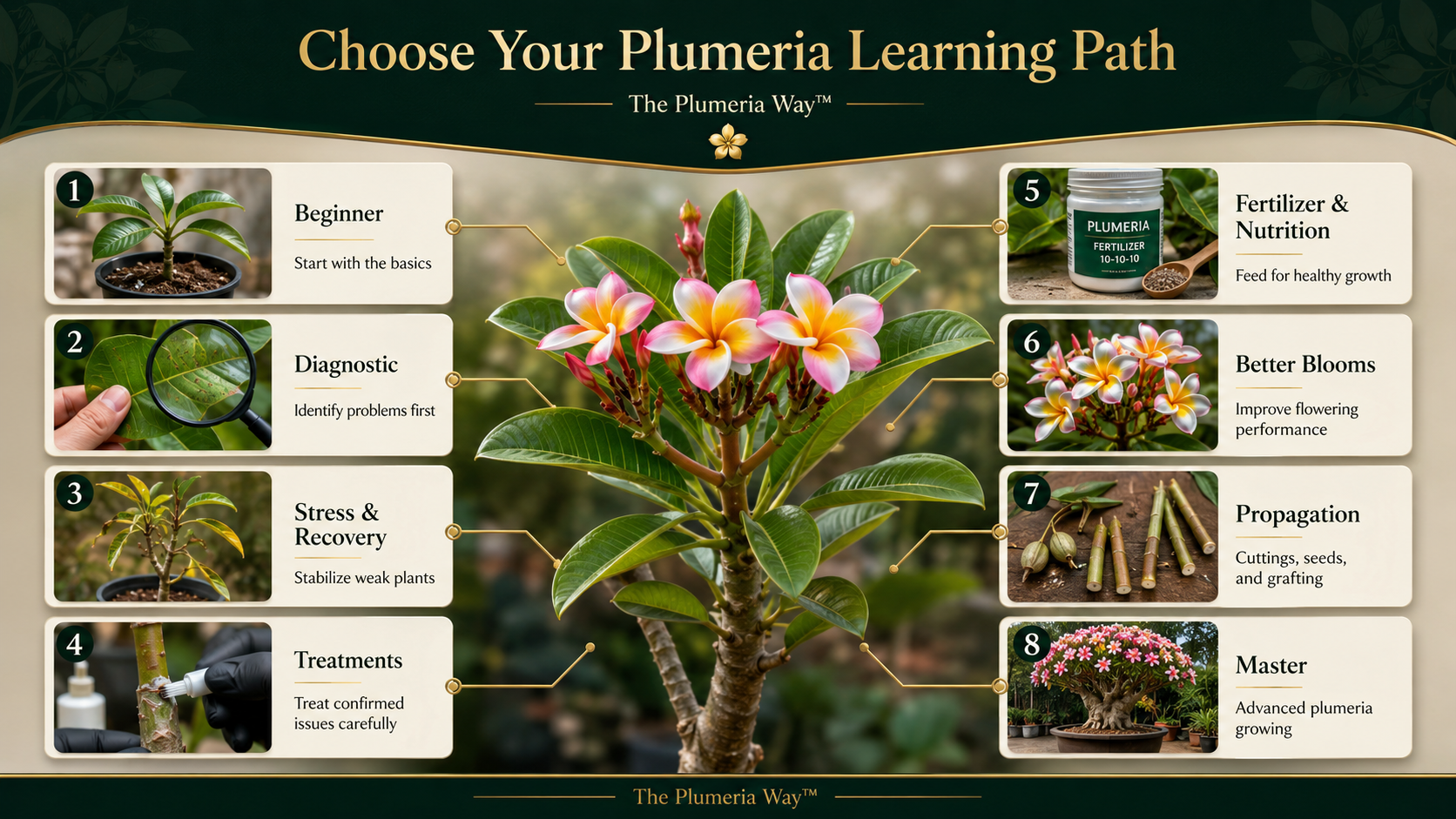
Choose Your Plumeria Learning Path
The Plumeria Way™ Learning Paths help you choose the safest route based on what your plumeria needs now.
Start with your current goal, your plant’s condition, and your experience level. When unsure, start earlier,
stabilize first, and move forward only when the plant is ready.
WHERE TO START
Start with the plant, not the problem
A plumeria care decision should begin with observation. Is the plant newly rooted, actively growing, stressed,
failing to bloom, showing pest symptoms, or recovering from damage? Each path below is designed to guide you
through the right sequence without guessing or jumping ahead too quickly.
If your plumeria is struggling, begin with diagnosis or recovery before fertilizer, pruning, or treatment.
If your plant is healthy and established, move into nutrition, blooming, propagation, or advanced study.
Select the path that matches your plumeria goal
Beginner Learning Path
For new growers, first-year growers, or anyone who wants a stronger foundation before moving into advanced care.
Learn the basics of plumeria watering, sunlight, containers, soil, seasonal growth, dormancy, and safe care habits.
Diagnostic Learning Path
For growers trying to understand leaf, stem, root, bloom, pest, or growth problems before taking action.
Learn how to separate symptoms from causes, avoid guesswork, and make care decisions based on what the plant is showing.
Stress & Recovery Learning Path
For plumeria recovering from shipping, repotting, heat, cold, drought, root loss, rot risk, or general weakness.
Learn how to stabilize the plant, protect the root system, reduce stress, and rebuild strength before pushing growth.
Treatments Learning Path
For confirmed problems involving pests, fungus, rot, leaf issues, stem damage, or other conditions that may need treatment.
Learn when to isolate, when to treat, when to prune, and when supportive care is safer than aggressive action.
Fertilizer & Nutrition Learning Path
For established plumeria that are ready for proper feeding, nutrient management, pH awareness, and bloom support.
Learn how fertilizer timing, slow-release nutrition, micronutrients, soil condition, salts, and watering work together.
Better Blooms Learning Path
For healthy plumeria that grow but do not bloom well, bloom late, bloom lightly, or need stronger bloom support.
Learn how maturity, sunlight, branch structure, cultivar behavior, nutrition, and seasonal timing influence flowering.
Propagation Learning Path
For growers working with plumeria cuttings, seeds, seedlings, grafting, pollination, seedpods, or cultivar development.
Learn safer propagation decisions, stronger rooting habits, seedling evaluation, grafting principles, and reproduction basics.
Master Learning Path
For experienced growers, collectors, educators, and nursery-level learners who want a deeper plumeria system.
Study advanced diagnostics, seasonal strategy, cultivar behavior, growth systems, recovery decisions, and long-term plant management.
HOW TO USE THE PATHS
Choose the safest sequence
1. Start with condition
A healthy, established plumeria can move into fertilizer, blooms, or propagation. A weak, stressed, or declining
plant should begin with diagnosis or recovery.
2. Diagnose before treating
Many plumeria problems look similar at first. Leaf yellowing, poor growth, wrinkling, soft stems, pest damage,
and root stress should be evaluated before applying treatments.
3. Build in phases
The Plumeria Way™ system is phase-based. Each path helps you move from basic understanding to stronger
care decisions without skipping the foundation.
NOT SURE WHICH PATH FITS?
Use the Phase Finder first
If you are not sure where your plumeria belongs, use the Phase Finder. It helps match your current plant condition,
growing goal, and experience level to the best starting point inside The Plumeria Way™ system.
“`