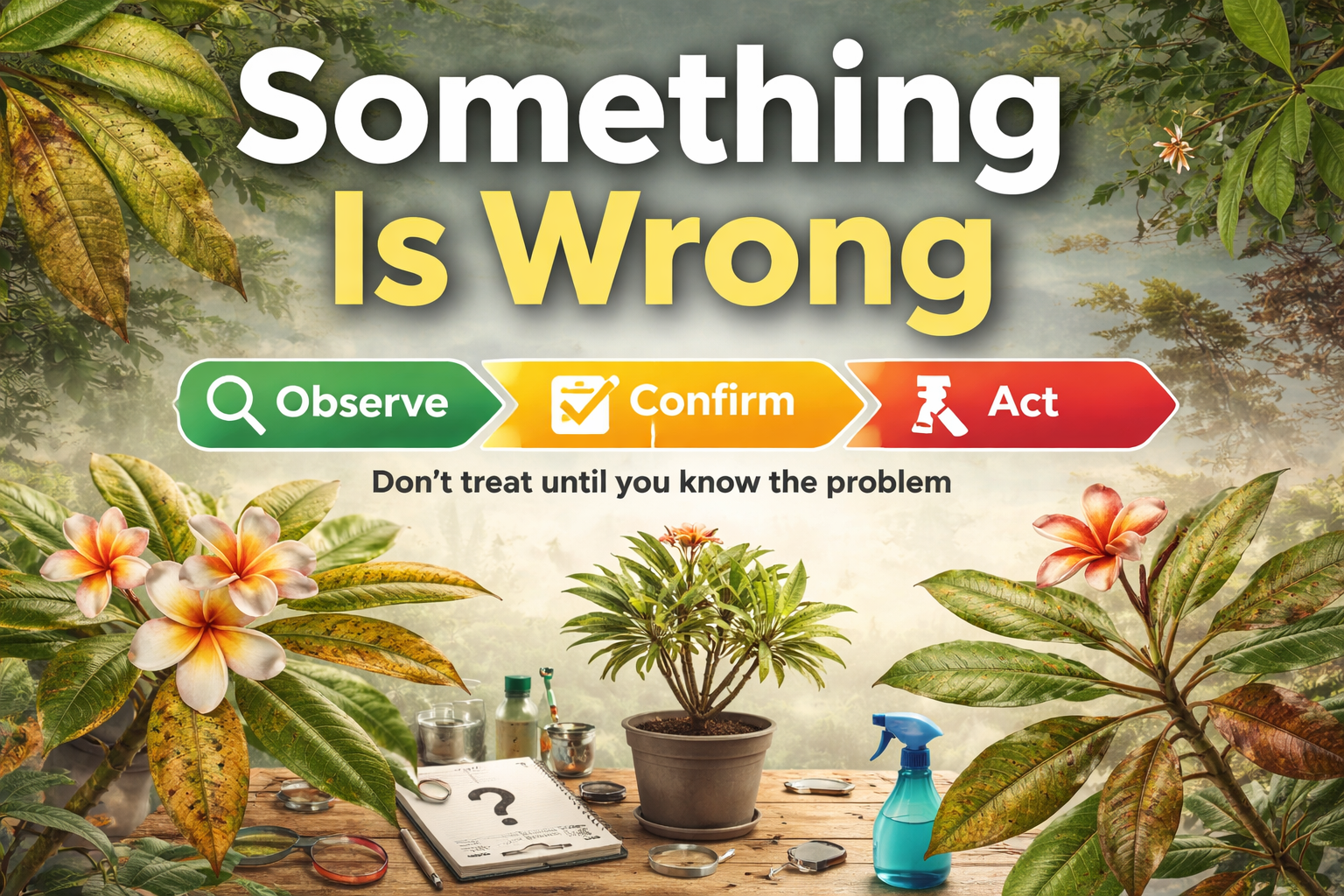
Something Is Wrong
When a plant looks wrong, urgency rises fast. The safer response is not speed. It is clearer observation, fewer variables, and a calmer route toward the right next step.
Do not stack changes. Slow down, reduce variables, and identify the category before you try to fix the outcome.
What This Page Does
This page is a public slow-down point. It helps you avoid the most common mistake in plant decline: reacting too fast with the wrong category of action.
Best for
Main outcomes
Better categorization, less panic, fewer unnecessary interventions, and a safer route into the right support page or course layer.
What it avoids
Panic spraying, emergency feeding, over-pruning, overwatering, and treating the symptom before the category is clear.
A wrong answer applied quickly can do more damage than a short pause used to clarify what is actually happening.
Your First Response
When a plant looks wrong, do not begin with products. Begin with safer first-response thinking.
Pause the extra variables
Stop stacking new inputs, new sprays, new fertilizers, and repeated changes while the category is still unclear.
Stabilize what you can stabilize
Keep placement, watering rhythm, and the root zone as steady as possible so the plant becomes easier to read.
Move into the right route
Once the first-response layer is calmer, move into the correct support path instead of guessing.
Choose the Safer Next Route
Not every problem belongs in the same lane. Use the route that matches the category more closely.
Diagnostic route
Use this route when the main need is better symptom reading, clearer pattern recognition, and stronger evidence before acting.
Stress & Recovery route
Use this route when the plant is unstable, recently stressed, declining, or likely to need recovery logic more than treatment-first logic.
Phase V route
Use this route when the problem clearly belongs later in the system and stronger diagnosis, recovery planning, and case handling are appropriate.
When the Safer Answer Is Earlier
A plant that looks bad does not always need the latest Phase. Many problems still begin with foundation or establishment issues.
Return to Phase I if the plant needs calmer observation
If the situation is still muddy and the plant needs steadier interpretation, an earlier Phase may still be the safer fit.
Check setup and root-zone stability
Watering, soil, drainage, and establishment problems often imitate more advanced issues.
Do not force the category
If the evidence is still weak, stay with the safer route long enough to make the next step cleaner.
What This Page Is Not
Something Is Wrong is a public first-response page, but it is not a treatment list and it is not the purchase page.
Not a product-first page
Starting with products before the category is clear often makes diagnosis harder, not easier.
Not proof that later is always better
More advanced routes are only safer when the plant and the evidence actually support them.
Not the purchase page
This page helps clarify the route. The Course Guide explains the course. The product page is where purchase happens.
Your Next Step
This page helps you slow down and choose the next route more safely. From here, move to the verified Phase V course-guide layer when the problem clearly belongs there.
Use it to slow down, reduce variables, and move into the safer next route with better evidence and better limits.