
Treatments Learning Path
The Treatments Learning Path helps growers understand when treatment belongs, when it does not, and how to respond more safely after the target is clearer. It is designed to reduce unnecessary spraying, avoid treatment stacking, and keep escalation inside evidence-based limits.
Treatments are not a starting point. They are a controlled response to a clearer target.
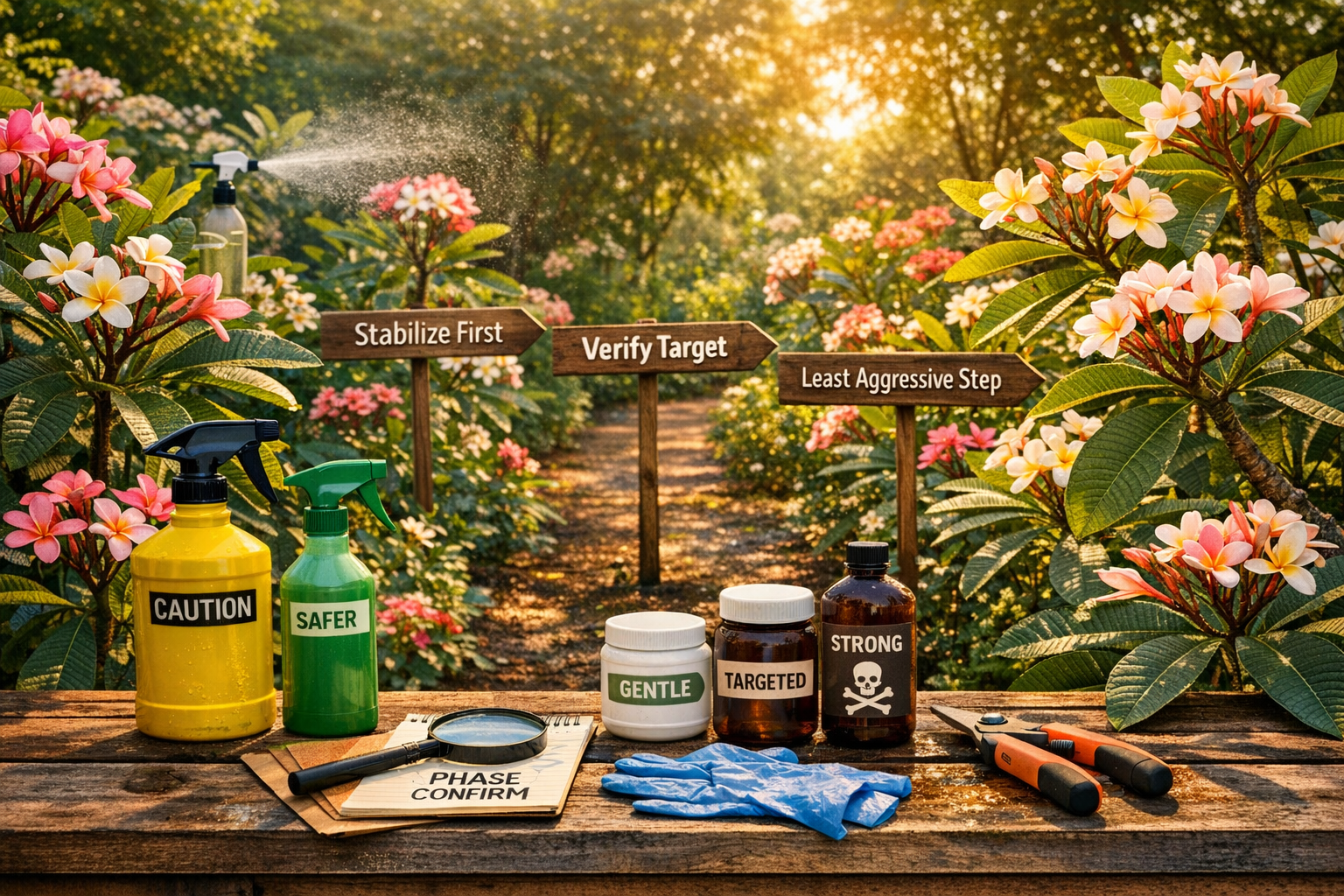
What This Path Does
Many treatment mistakes happen when the wrong category is treated, when urgency outruns evidence, or when several products are layered together before the plant and problem are understood. This path helps growers slow down, verify more, and choose the least aggressive effective step.
Best for
Growers dealing with confirmed or strongly suspected pests, disease pressure, or repeated problems that may require a controlled treatment plan.
Main outcomes
Safer treatment decisions, fewer unnecessary applications, better timing, and clearer follow-through.
What it avoids
Spray-and-pray behavior, wrong-target treatment, excessive escalation, and extra plant stress caused by poor sequencing.
If you cannot name the target with reasonable confidence, it is too early to make a stronger treatment decision.
The Treatments Sequence
This path works best when followed in order. Each step helps treatment decisions become safer and easier to evaluate.
Step 1 — Choose the safest starting point
Start by deciding whether the plant is stable enough for treatment decisions now or whether the safer answer is a calmer earlier route first.
Step 2 — Clarify the category first
Use the Diagnostic Path when the real need is better categorization: pest, disease, stress, or something else that only looks like a treatment problem.
Step 3 — Use treatment only inside boundaries
Use Phase V when treatment decisions need stronger evidence, better stop points, and more disciplined escalation.
Step 4 — Learn the treatment framework
Use the Treatments Course page when you are ready to study safer treatment logic, escalation boundaries, and treatment discipline.
Step 5 — Keep other variables steady
Avoid changing water, fertilizer, pruning, and multiple products all at once. Treatments are easier to judge when the rest of the system stays calmer.
Step 6 — Reassess before escalating
Re-evaluate after the correct interval. Do not escalate early just because the plant still looks stressed in the short term.
Who This Path Helps Most
The Treatments Learning Path is for growers who want a safer, more disciplined way to approach intervention.
Growers facing confirmed problems
Best for growers dealing with recurring pest or disease pressure that may require a planned response.
Growers prone to overreacting
Best for growers who feel pressure to spray quickly and need a calmer structure for decision-making.
Growers wanting clearer boundaries
Best for growers who want to know when treatment belongs, when it should wait, and how to escalate more safely.
What This Path Is Not
The Treatments Learning Path is a discipline-building route, but it is not permission to default to chemicals or stronger intervention.
Not a spray list
The goal is not to collect products. The goal is to build safer logic for when and why treatment belongs.
Not a shortcut around diagnosis
A treatment applied to the wrong target can intensify stress without solving the actual problem.
Not the purchase page
This page helps organize the route. The course page explains the treatments framework. A matching product link is not verified in the current product export.
Your Next Step
This path helps you organize safer treatment learning. From here, move to the course page or the supporting diagnostic and Phase V pages that best match the plant and problem in front of you now.
Find My Phase → Learn About This Course → My Courses
A matching treatments product link is not currently verified in the uploaded product export.
Use it to slow down, verify more, treat less aggressively, and keep intervention inside clearer evidence-based boundaries.