
Phase System Visuals
Phase System Visuals help growers compare plant condition, structure, stability, and readiness so the correct phase becomes easier to identify. These visuals support safer decisions by showing what belongs earlier, what belongs later, and why advancing too soon creates risk.
A plant should not be advanced because the grower wants movement. The next step should match demonstrated readiness, not impatience.
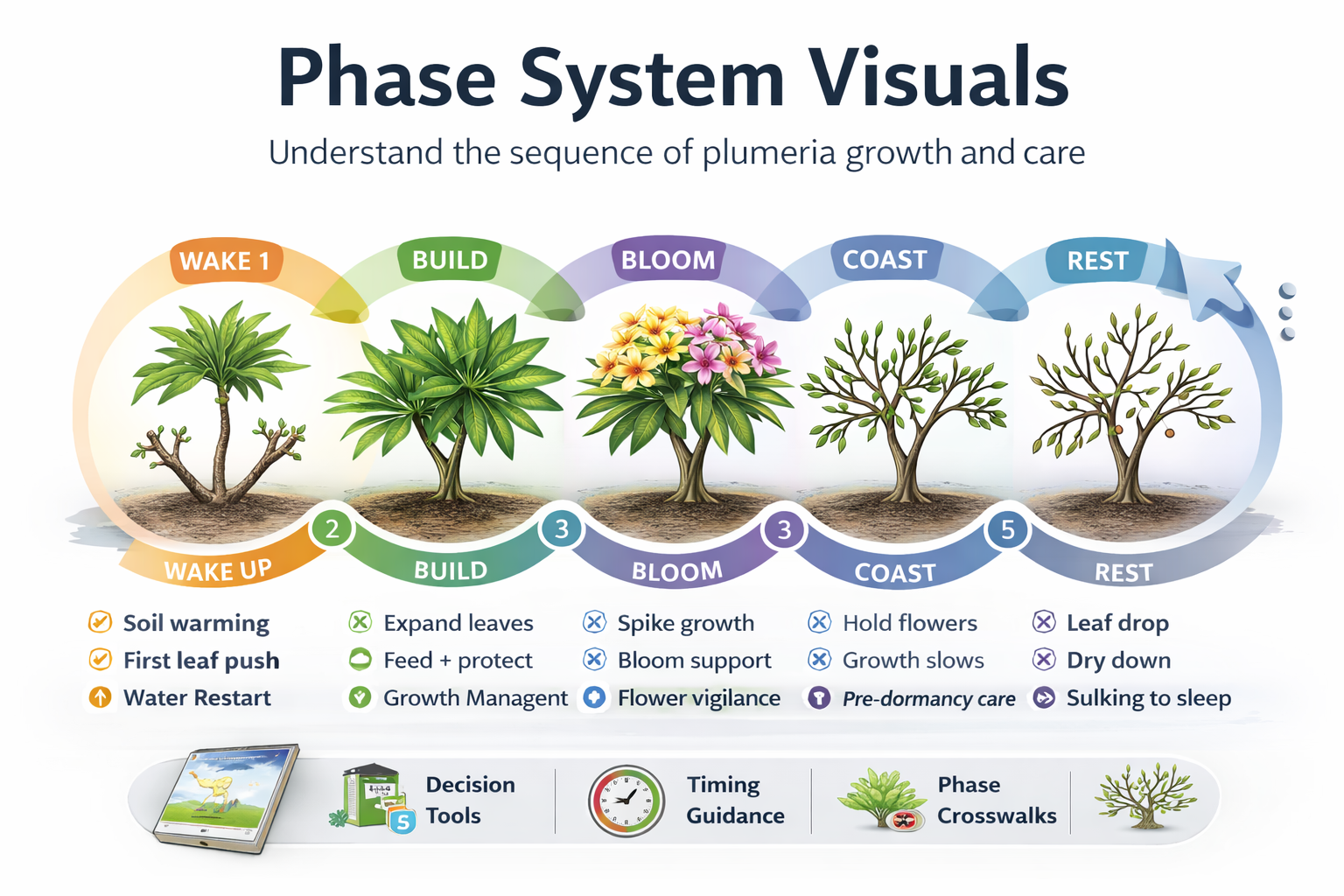
What Phase System Visuals Are For
Some plants look more advanced than they really are. Some look active but are not yet ready for escalation. This page helps you compare visual patterns so phase selection is based on evidence rather than assumption.
Compare the current condition
See readiness more clearly
Readiness is easier to judge when structure, rhythm, stability, and recovery capacity can be compared side by side.
Choose the safer boundary
When the comparison is unclear, the earlier phase is usually the safer choice because it protects the plant from premature escalation.
Compare the Five Phases
Each phase represents a different level of plant stability, response, structure, and capacity. The visuals on this page should help you compare what belongs now rather than what you hope belongs next.
Phase I — Foundation
Use this phase when the plant still needs basic stability, simpler structure, and lower-risk decisions.
Phase II — Establishment
Use this phase when the plant is moving beyond the earliest stage and needs steadier setup, support, and development.
Phase III — Growth & Structure
Use this phase when the plant has enough margin for stronger vegetative development, branching, and structural guidance.
Phase IV — Bloom Systems
Use this phase when bloom support, timing, and reproductive readiness are the central focus.
Phase V — Mastery, Diagnostics & Recovery
Use this phase when higher-level diagnosis, correction boundaries, and advanced judgment are required.
How to Use These Visuals Correctly
Compare what is visible now
Use present condition, not future hopes, to decide where the plant belongs.
Do not force advancement
A plant that is not ready for the next phase should not be pushed because the grower wants faster progress.
Use earlier when uncertain
When two phases seem possible, the earlier phase is usually the safer working boundary.