
How to use this course: Already enrolled or purchased? Log in through My Courses & Account. Still choosing where to begin? Start with Find My Phase or browse the Course Guides. Some courses may appear closed until enrollment is opened or your account is connected.
Course Overview
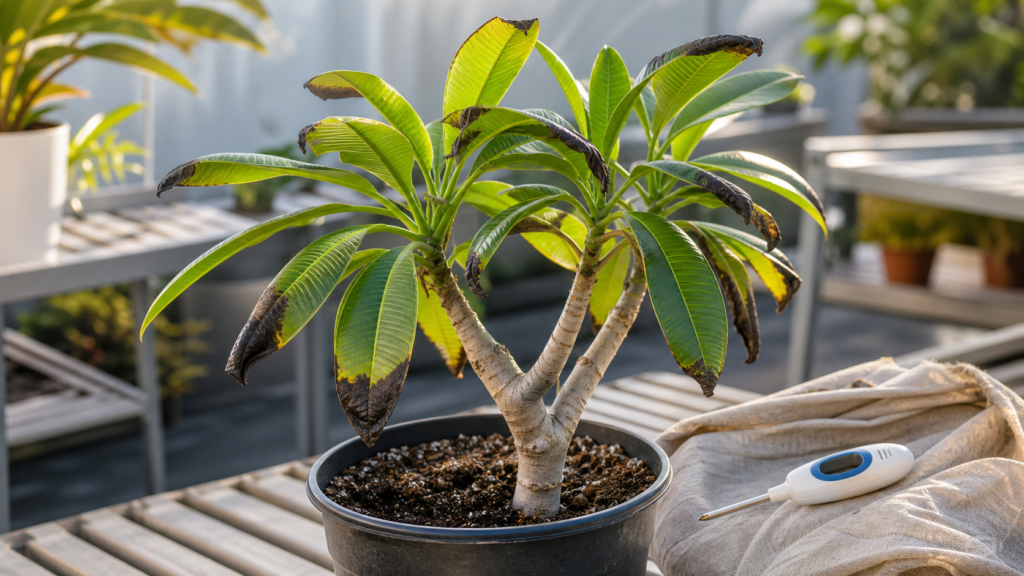
Cold damage in plumeria can be immediate, delayed, mild, or severe. Leaves, tips, buds, stems, and roots can each respond differently after a cold night or freeze event.
This course teaches students to separate chilling injury from freeze damage, protect the plant from repeated exposure, and wait long enough for damaged tissue to declare itself.
The course avoids the common mistake of cutting too soon. Immediate response focuses on protection, dryness, warmth, airflow, and observation.
Recovery decisions come later, when dieback lines are clearer and the grower can distinguish recoverable tissue from tissue that should be removed.
Course Outcomes
- Recognize common cold-damage symptoms on leaves, tips, buds, stems, and roots.
- Understand why cold damage can appear slowly after exposure.
- Protect a plant from repeated cold without adding new stress.
- Decide when to wait and when pruning is justified.
- Use a checklist to separate recoverable tissue from tissue that should be removed later.
Course Lessons
- What Cold Damage Looks Like
- Vulnerable Tissues
- Immediate Response
- Recovery Decisions
- Cold Damage Checklist
Related CareGuide Reading
- How to handle Plumeria cold damage? – Use for cold damage overview
- Understanding Frost and Freeze Damage – Use for frost versus freeze context
Learning Note
Use these readings as supporting references after you complete the PlumeriaWay observation steps. Cold damage can change over several days, so protect the plant, reduce new stress, and wait for clear evidence before major cuts.