
How to use this course: Already enrolled or purchased? Log in through My Courses & Account. Still choosing where to begin? Start with Find My Phase or browse the Course Guides. Some courses may appear closed until enrollment is opened or your account is connected.
Course Overview
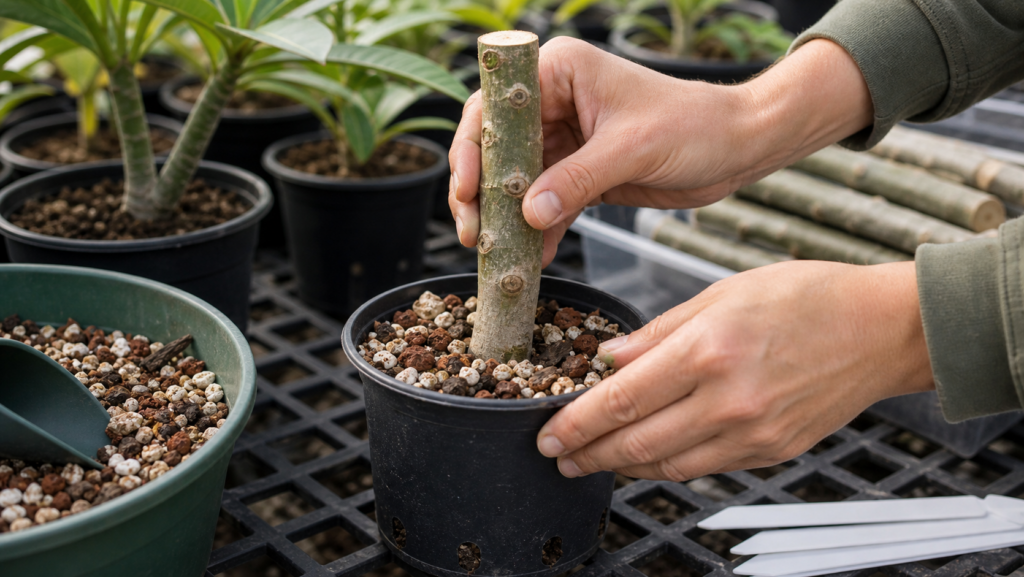
Rooting a plumeria cutting works best when readiness, environment, water, and patience line up. The cutting should be mature and callused, the media should hold oxygen, the container should drain, and watering should be conservative until roots are credible.
This course teaches a standard soil-style rooting path. Students learn how to prepare the cutting, set up the container and media, water without suffocating the base, read progress without pulling the cutting, and recognize common failure patterns.
This course builds on cutting preparation and rooting environment. It does not replace deeper troubleshooting or alternate rooting-method guides.
Course Outcomes
- Confirm that a cutting is ready before planting.
- Use airy media and a stable draining container.
- Water conservatively while roots are absent or forming.
- Read rooting progress without disturbing the cutting.
- Recognize common failures and avoid panic responses.
Course Lessons
- Rooting Readiness
- Media and Container Setup
- Watering During Rooting (B4)
- Recognizing Rooting Progress
- Common Rooting Failures (D1/S1)
Related CareGuide Reading
- Traditional Soil Rooting Method for Plumeria Cuttings Guide (Plumeria Propagation and Rooting Guide)
- Propagation Timeline & Milestones for Rooting Plumeria Cuttings (Plumeria Propagation and Rooting Guide)
Key Takeaway
Rooting succeeds when a ready cutting is placed in an airy stable setup, watered from evidence, and left undisturbed long enough for roots to form.