
Diagnostic Learning Path
The Diagnostic Learning Path helps growers slow down, separate symptoms from causes, and make safer decisions when something looks wrong. It is designed to reduce guessing, prevent compounding damage, and keep corrective action inside clearer limits.
Do not treat first. Observe first, narrow the category, and make the smallest safe move only after the picture is clearer.
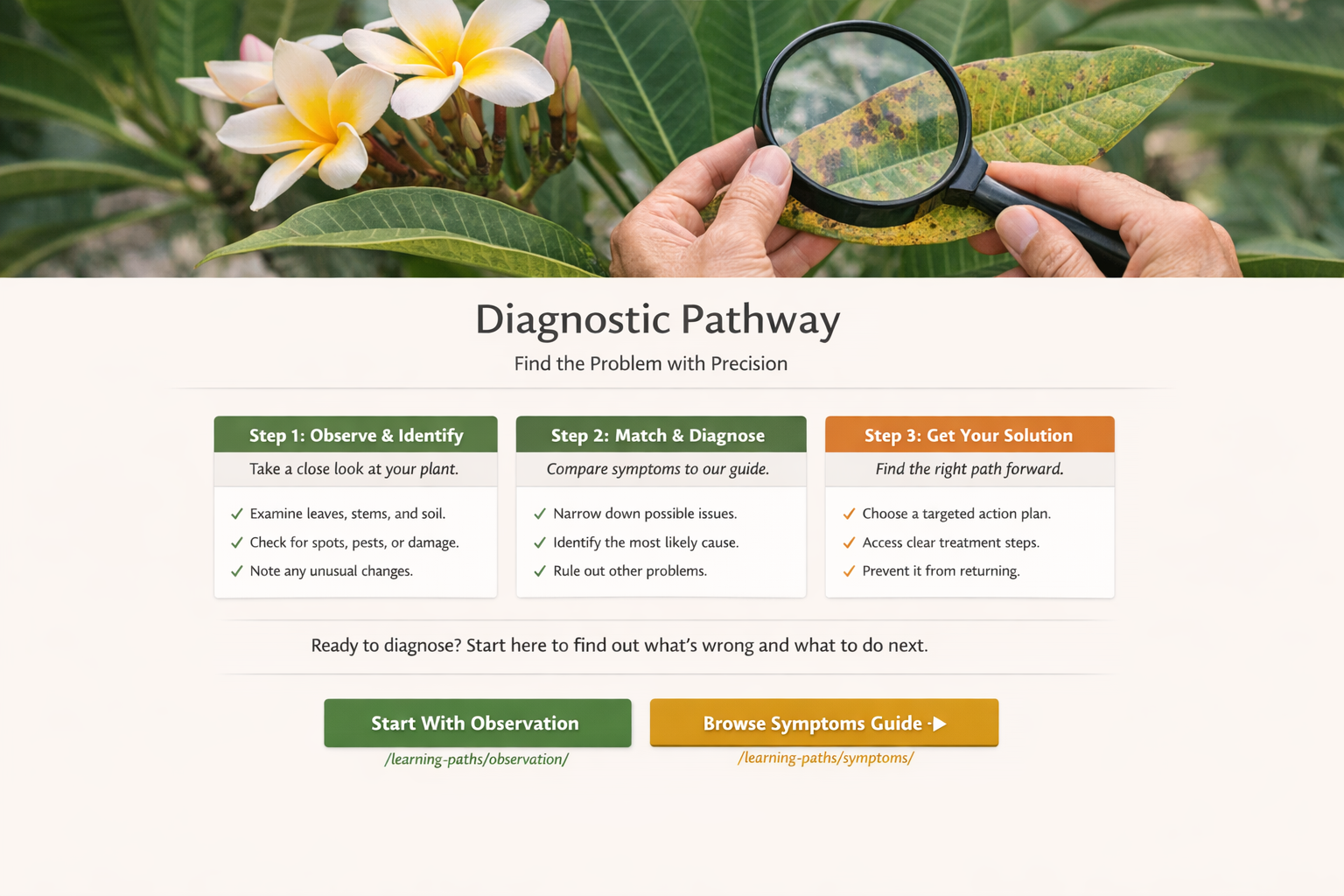
What This Path Does
Diagnostic mistakes usually happen when appearance is mistaken for cause, urgency outruns evidence, or treatments are stacked before the category of problem is even clear. This path helps replace reaction with disciplined observation.
Best for
Growers facing yellowing, spotting, decline, stalled growth, strange behavior, or symptoms that do not yet point to a clear cause.
Main outcomes
Better categorization, calmer troubleshooting, clearer stop points, and safer corrective decisions.
What it avoids
False deficiency calls, panic spraying, over-pruning, treatment stacking, and escalating the wrong answer.
A wrong treatment applied with confidence can do more damage than uncertainty handled with restraint.
The Diagnostic Sequence
This path works best when followed in order. Each step is meant to reduce assumption before you move into stronger correction.
Step 1 — Choose the safest starting point
Start by deciding whether the plant truly belongs in a diagnostic route now or whether the safer answer is an earlier Phase.
Step 2 — Learn the Phase fit
Use the Phase V page to understand where diagnosis, recovery, and corrective decision-making fit in the larger system.
Step 3 — Use recovery discipline
If stress or decline is involved, use the Stress & Recovery path as support after the problem category is becoming clearer.
Who This Path Helps Most
The Diagnostic Path is for growers who need clearer judgment before they take stronger action.
Growers seeing symptoms
Growers under pressure to act fast
Best for growers who feel urgency and need a calmer process before choosing a correction.
Growers recovering from mixed signals
Best for growers who have multiple possible causes in play and need to narrow the category more carefully.
What This Path Is Not
The Diagnostic Path is a discipline-building route, but it is not permission to overreact.
Not a treatment list
The goal is not to collect products first. The goal is to understand what category of problem is actually present.
Not proof that later is always right
Some plants that look “diagnostic” at first actually need a return to earlier stability, setup, or bloom support basics.
Not the purchase page
This page helps organize the route. The Course Guide explains the course. The product page is where purchase happens.
Your Next Step
This path helps you organize evidence-first learning. From here, move to the Phase V page or Course Guide if that is truly the correct fit for the plant and situation in front of you now.
Use it to slow down, clarify the category, and make better evidence-based decisions before you escalate into stronger corrective action.