Stress & Recovery Visuals
Stress & Recovery Visuals help growers compare plant slowdown, environmental injury, recovery patterns, and stabilization cues before reacting too quickly. These visuals support calmer decisions by helping separate active damage, temporary stress, and normal slowdown from situations that truly require intervention.
Stress is not always failure. Recovery begins with reducing pressure, restoring clarity, and choosing the smallest safe next step.
What Stress & Recovery Visuals Are For
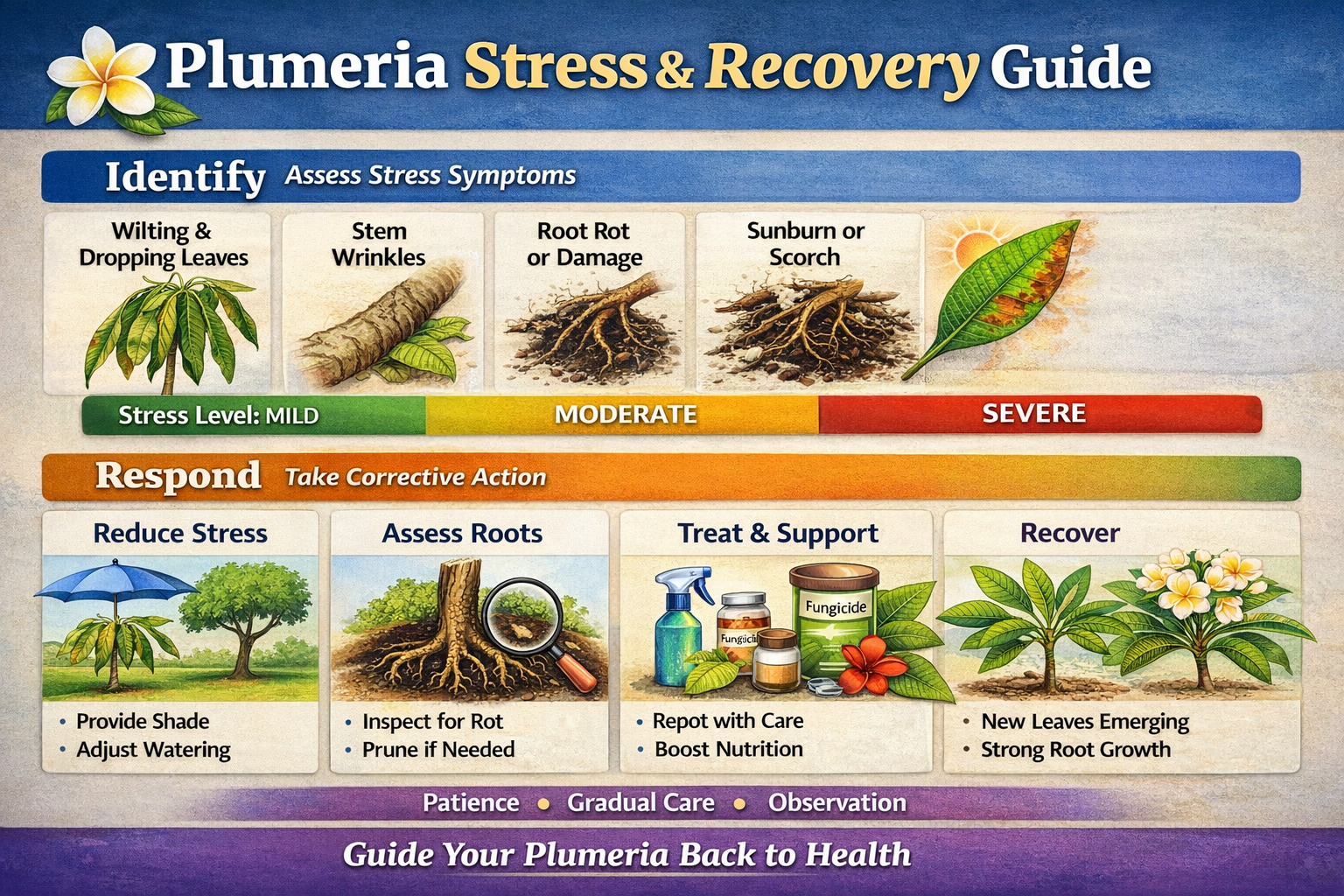
Many plumeria setbacks are made worse by reacting too fast. This page helps growers compare stress patterns, recovery signals, and stabilization cues so they can decide whether to wait, support, or intervene with better timing.
See stress patterns more clearly
Compare signs of slowdown, dehydration, heat pressure, cold injury, transplant stress, and recovery response side by side.
Separate active damage from temporary slowdown
Some plants look worse than they are. Visual comparison helps distinguish temporary stress from situations that truly need stronger correction.
Support calmer decisions
Recovery works best when pressure is reduced and evidence is allowed to develop instead of being buried under too many changes.
Suggested Stress & Recovery Visual Categories
This page works best when visuals are grouped by stress pattern and recovery logic rather than by random image collection alone.
Environmental Stress
- Cold damage and frost injury
- Heat and drought stress
- Sunburn and scorch
- Seasonal slowdown vs abnormal decline
- Leaf drop patterns by season
Root and Establishment Stress
- Wrinkled stems and dehydration signals
- Transplant shock
- Overwatering and poor dry-down patterns
- Root damage or stalled establishment
- Container-related stress cues
Recovery Signals
How to Use This Page
Stress & Recovery visuals should help you move from concern to sequence. They are not meant to trigger rushed action from one image alone.
1. Match the stress pattern
Start by finding the closest visual match for what the plant is showing now, without forcing a conclusion too early.
2. Check the recent pressure
Compare the visual pattern against watering, temperature, rooting status, repotting, feeding, and recent environmental changes.
3. Choose the smallest safe next step
Use the visual comparison to decide whether the plant needs stabilization, observation, reduced pressure, or targeted follow-up.
Recovery usually improves when inputs are simplified. Patience, observation, and gradual care often restore more clarity than rapid escalation.
Recommended Page Sections
If you continue building this page over time, these content blocks will keep it useful, organized, and easy to expand.
Stress symptom galleries
Group images by stress source so growers can compare cold, heat, dehydration, and transplant-related patterns more clearly.
Recovery stage comparisons
Show what early recovery, partial recovery, and stable recovery look like so growers do not misread temporary improvement as full readiness.
Next-step links
Link each visual group to related stress, diagnostics, fertilizer, or treatment resources so the page supports real decisions.
Related Resources
Stress & Recovery becomes more useful when visuals connect to structured observation, stabilization, and next-step discipline.
Stress & Recovery Field Books
Use the S-Series to reinforce stabilization thinking, timing discipline, and recovery boundaries.
Diagnostics Visuals
Use diagnostics comparisons when the pattern is still unclear and you need stronger symptom separation before acting.
Treatments
Move into treatment only after stress, timing, and recovery capacity are more clearly understood.
Use these visuals to compare stress patterns, support calmer decisions, and choose the safest next step before escalating.