
How to use this course: Already enrolled or purchased? Log in through My Courses & Account. Still choosing where to begin? Start with Find My Phase or browse the Course Guides. Some courses may appear closed until enrollment is opened or your account is connected.
Course Overview
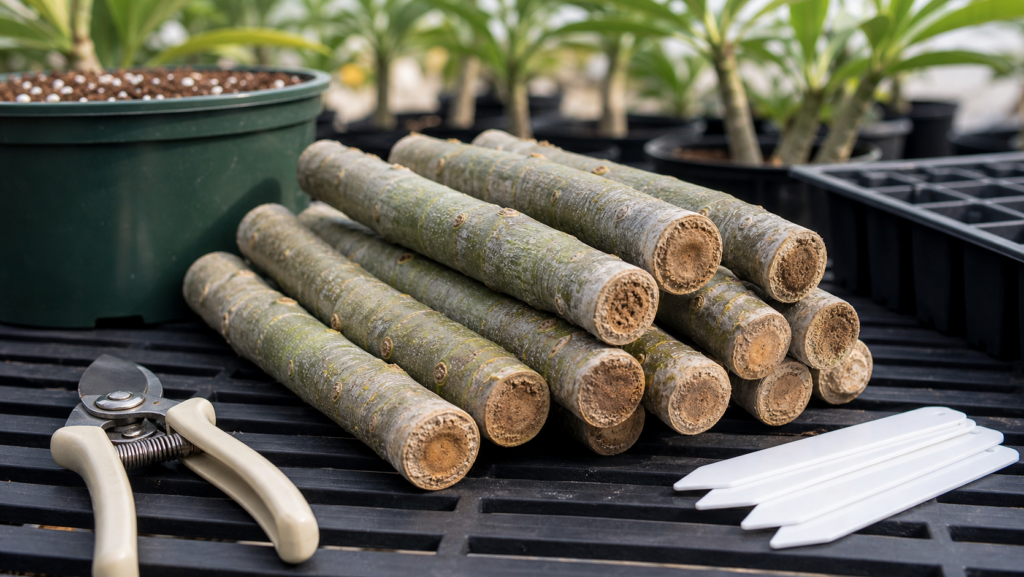
Successful rooting starts before a plumeria cutting goes into media. The grower must decide whether the cutting is mature, firm, clean, correctly oriented, safely handled, and ready to callus before planting.
This course teaches students how to choose and prepare plumeria cuttings without rushing into a rooting setup. It focuses on wood quality, damage avoidance, dehydration management, callus readiness, orientation, labels, and the final readiness check.
This course is separate from rooting-environment setup and failure review. Here, the student is still preparing the cutting. The goal is to enter the rooting stage with better material and fewer preventable problems.
Course Outcomes
- Select mature, firm cuttings that are worth rooting.
- Handle fresh or purchased cuttings without adding damage.
- Understand why drying and callusing protect the cut end.
- Mark top and bottom orientation and preserve cultivar/source records.
- Use a preparation checklist before planting.
Course Lessons
- Selecting a Cutting Worth Rooting
- After Purchase or Cutting Removal
- Drying and Callusing
- Marking Top and Bottom
- Preparation Checklist
Related CareGuide Reading
- Selecting Appropriate Branches for Plumeria Propagation (Plumeria Propagation and Rooting Guide)
- Taking Cuttings for Rooting Plumeria (Plumeria Propagation and Rooting Guide)
Key Takeaway
Preparation protects the rooting attempt. Choose firm mature wood, avoid extra damage, let the wound callus, preserve orientation and labels, and plant only when the cutting and setup are ready.