
Fertilizer Timing Visuals
Fertilizer works best when it follows the natural growth rhythm of plumeria. These visuals help growers compare feeding windows against seasonal activity, root response, structural development, and bloom timing so inputs are used when the plant can actually benefit from them.
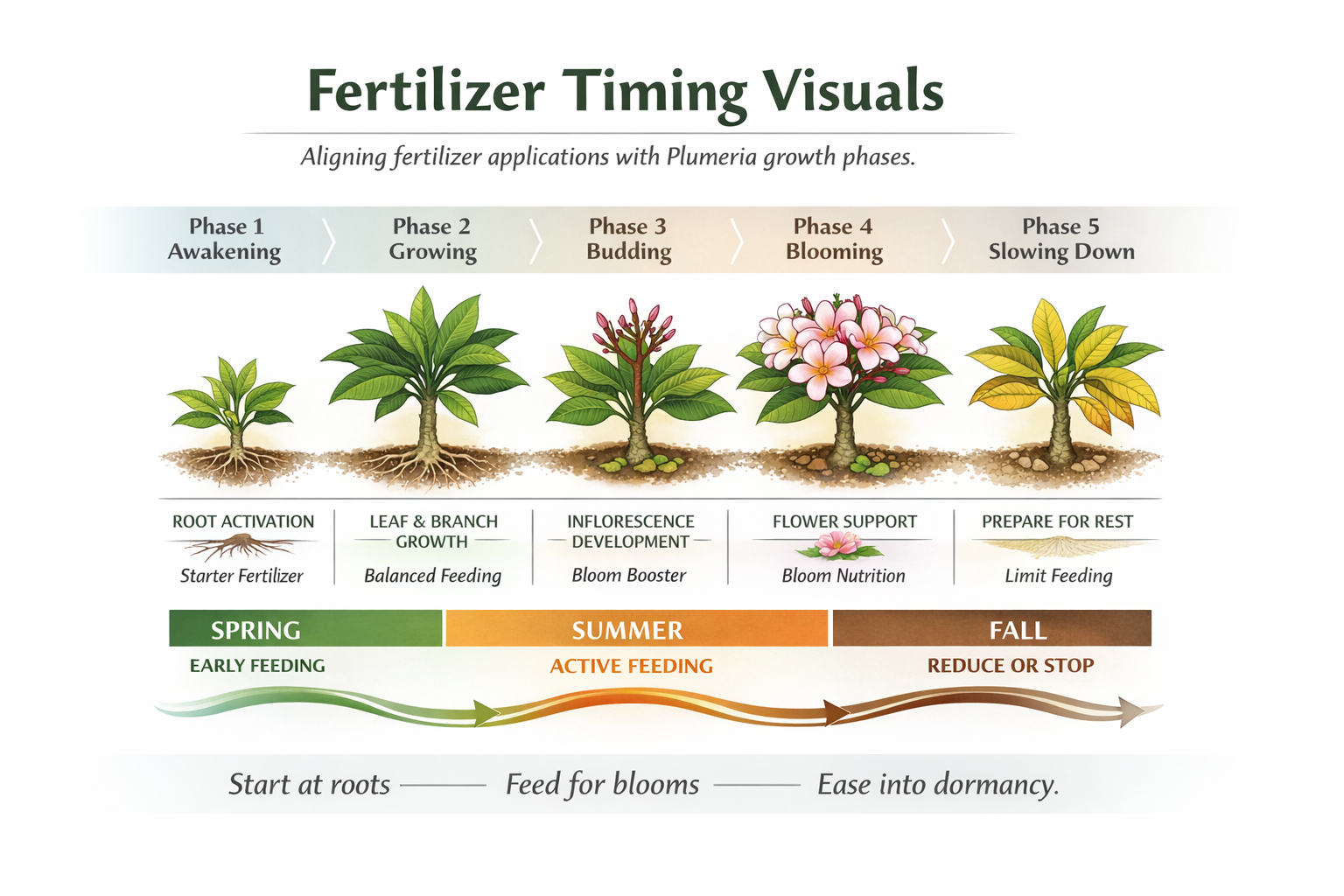
Fertilizer timing should follow readiness, not urgency. Feeding too early, too late, or too heavily can distort growth, increase salt pressure, and reduce clarity.
Why Timing Matters
Plumeria do not use nutrients evenly throughout the year. Feeding outside the right window can lead to wasted fertilizer, avoidable salt accumulation, unnecessary vegetative push, or inputs that arrive before roots and plant rhythm are ready to use them well.
Root activity comes first
Feeding is most useful when root activity is present. Surface movement alone does not always mean the plant is ready for stronger nutrition.
Demand changes by season
Nutrient demand rises and falls with plant rhythm. Timing matters as much as product choice.
Late feeding has consequences
Continuing strong feeding too late can create buildup, soft growth, and weaker seasonal transition.
Seasonal Fertilizer Timing
These seasonal comparisons help show when feeding usually supports the plant and when restraint is safer.
Early Season
When plumeria first break dormancy, roots often begin reactivating before strong top growth appears. Support at this stage should stay measured and aligned with confirmed activity.
Active Growth Period
During the main growing season, plumeria produce new branches, leaves, and inflorescences. This is the period when nutrient demand is usually highest and timing discipline matters most.
Bloom Development
Balanced nutrition supports inflorescence formation and flowering performance when structure, plant health, and timing are already in place.
Late Season
As growth slows and day length changes, fertilizer demand declines. Heavy late feeding often creates more problems than benefits.
Feeding should describe what the plant can use now, not what the grower hopes to force next.
How to Read Fertilizer Timing Visuals
Use timing visuals to compare readiness, not just calendar date. Season matters, but plant condition and root response matter too.
1. Check the phase first
The correct feeding window depends on whether the plant is still stabilizing, actively growing, structurally developing, or supporting bloom.
2. Compare demand, not just date
Two plants in the same month may not have the same nutrient demand. Read the plant before increasing inputs.
3. Stay conservative when unclear
When readiness is mixed, earlier and lighter is usually safer than pushing ahead too soon.
Fertilizer Timing Diagram
Use this diagram to compare growth phase, seasonal rhythm, and feeding intensity so your schedule follows plant readiness more closely.
Related Visual Guides
Fertilizer timing becomes much clearer when it is connected to phase, diagnosis, and season-aware decision-making.
Phase System Visuals
Use phase comparisons to decide what actions are actually safe now.
Fertilizer Field Books
Use structured field references to reinforce nutrient timing, chemistry, and feeding boundaries.
Courses
Use the courses page to move from reference visuals into guided instruction.
Use these visuals to compare seasonal demand, plant readiness, and feeding windows so fertilizer supports growth instead of distorting it.