How to use this course: Already enrolled or purchased? Log in through My Courses & Account. Still choosing where to begin? Start with Find My Phase or browse the Course Guides. Some courses may appear closed until enrollment is opened or your account is connected.
Course Overview
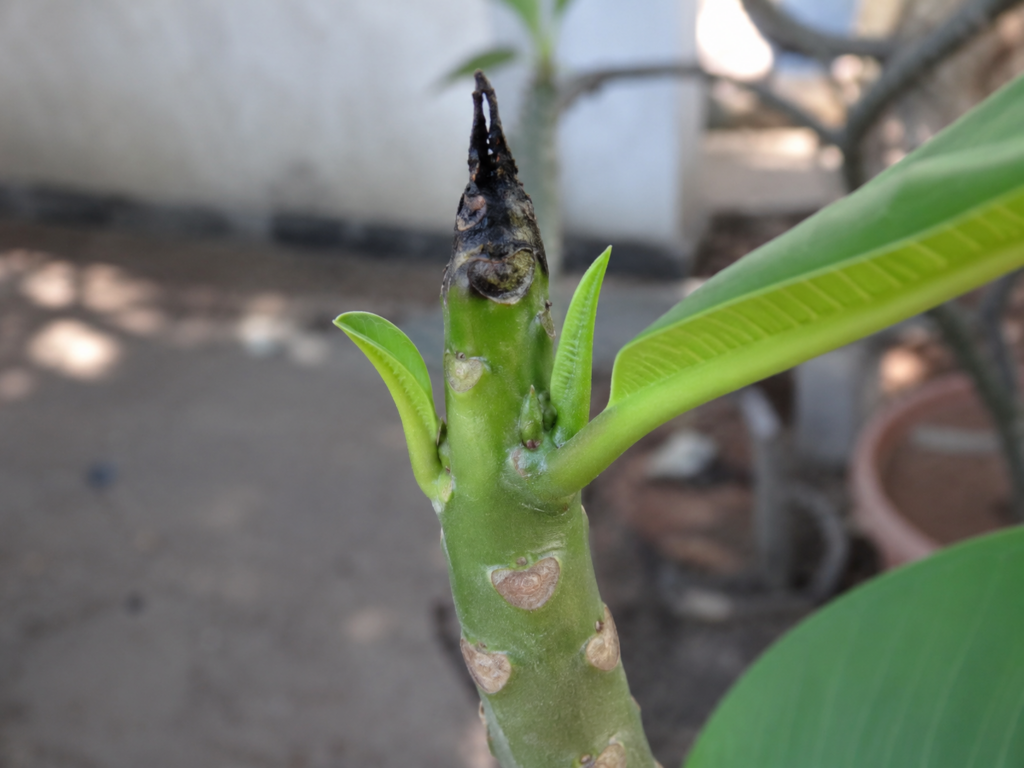
Black tip on plumeria is a symptom pattern, not a complete diagnosis by itself. A darkened growing tip may follow cold exposure, wet media, pruning injury, weather shifts, or an active disease problem.
This course teaches students to slow down, inspect the tissue, compare recent conditions, and decide whether the damage is stable or advancing.
The safest first response is to protect the plant, avoid new stress, keep the root zone appropriately dry, and document what changes over the next several days.
Correction is bounded. Students remove tissue only when it is clearly dead, soft, spreading, or creating sanitation risk. Stable or uncertain tips are watched until the evidence is clearer.
Course Outcomes
- Define black tip as a symptom pattern and avoid automatic disease assumptions.
- Identify cold, wet, pruning, weather, and disease-related clues.
- Inspect firmness, color, spread pattern, and timing before acting.
- Choose when to wait and when damaged tissue should be removed.
- Recognize recovery signs and escalation triggers.
Course Lessons
- What Growers Mean by Black Tip
- Common Causes
- What to Inspect First
- Bounded Correction
- Black Tip Checklist
Related CareGuide Reading
- Understanding Black Tip Rot in Plumeria: Causes and Symptoms – Use for course-level symptom framing
- Identifying and Diagnosing Black Tip Rot in Plumeria – Use for diagnostic evidence
Learning Note
Use these readings as supporting references after you complete the PlumeriaWay observation steps. Black tip is a symptom pattern, so confirm timing, firmness, spread, and recent stress before cutting or treating.