
How to use this course: Already enrolled or purchased? Log in through My Courses & Account. Still choosing where to begin? Start with Find My Phase or browse the Course Guides. Some courses may appear closed until enrollment is opened or your account is connected.
Course Overview
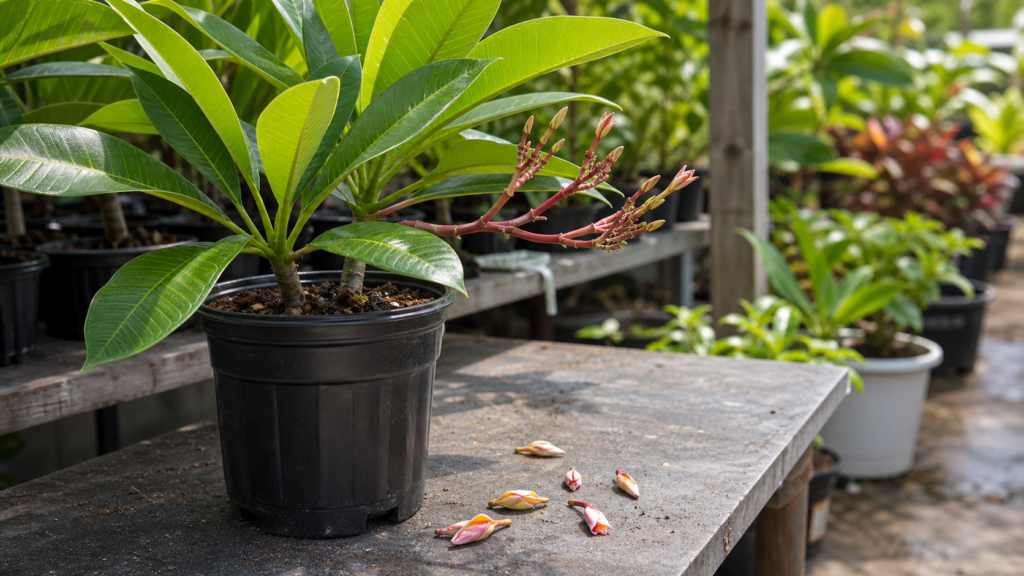
Bud drop in plumeria is usually a signal that the plant is balancing bloom demand against stress, capacity, water, weather, nutrition, or recent change.
This course teaches students to tell normal bud thinning from warning-level bud loss, then trace the most likely stress before making corrections.
The safest response is not to stack fertilizer, sprays, hormones, and watering changes at the same time. Students stabilize one variable, observe, and then decide whether a second step is justified.
The course separates flower bud drop from seedpod drop, propagation cutting issues, and general poor blooming so the student stays focused on the right problem.
Course Outcomes
- Recognize what bud drop looks like and when some thinning can be normal.
- Compare water swings, heat, cold, moves, nutrition, salt, and plant capacity.
- Avoid overfeeding, over-spraying, and stacked corrections during bloom.
- Record useful evidence before changing care.
- Choose when to hold steady and when intervention is warranted.
Course Lessons
- What Bud Drop Looks Like
- Common Causes of Bud Drop
- Nutrition and Salt Issues
- What to Change First
- What to Change First
- Bud Drop Checklist
Related CareGuide Reading
- Why are the buds on my Plumeria tree falling off? – Use for course-level bud drop overview
- Why does Plumeria drop buds in fluctuating temperatures? – Use for environmental stress context
Learning Note
Use these readings as supporting references after you complete the PlumeriaWay observation steps. Bud drop is easier to diagnose when you stabilize one variable at a time and avoid stacking bloom fixes.