
How to use this course: Already enrolled or purchased? Log in through My Courses & Account. Still choosing where to begin? Start with Find My Phase or browse the Course Guides. Some courses may appear closed until enrollment is opened or your account is connected.
Course Overview
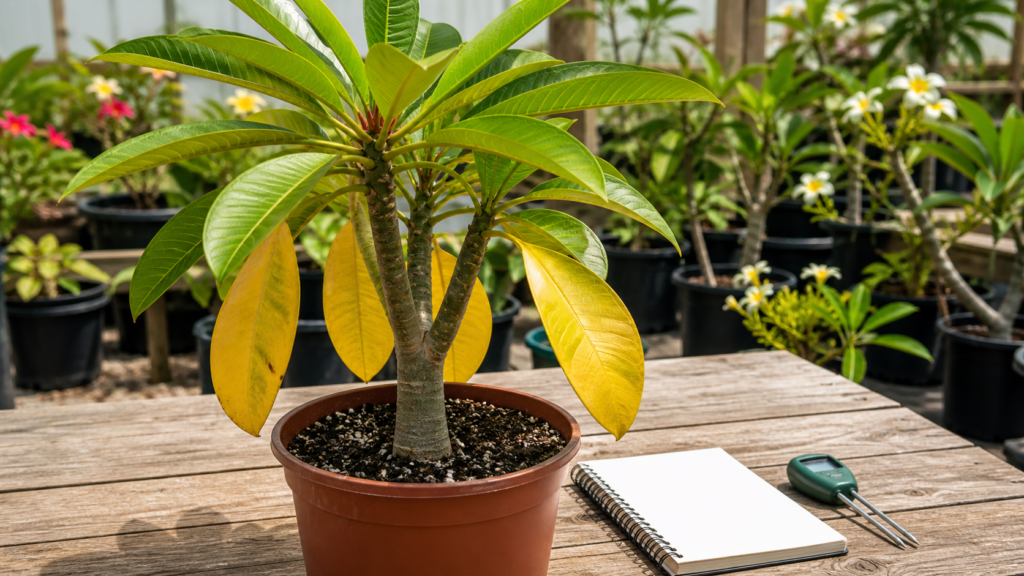
Yellow leaves are one of the most common plumeria symptoms, but they are not a diagnosis by themselves. The same color change can come from normal leaf aging, dormancy, watering problems, root stress, nutrients, pH, environment, or pests.
This course teaches students to slow down and read the pattern before changing care. The first question is not what to apply, but which leaves are yellowing, how fast the pattern is spreading, and what changed before the symptom appeared.
Students learn to compare water and root clues, nutrient and pH clues, environmental stress, pest evidence, and damage patterns. The course keeps strong corrections behind evidence.
The goal is a practical response plan: gather evidence, make one controlled change, then judge whether the plant is stabilizing or needs escalation.
Course Outcomes
- Separate normal seasonal yellowing from problem yellowing.
- Compare overwatering, underwatering, and root-zone oxygen loss clues.
- Recognize when nutrient or pH issues are likely and when they are not.
- Inspect for environmental stress and pest patterns without jumping to treatment.
- Build a one-change-at-a-time response plan.
Course Lessons
- Normal vs Problem Yellowing (D1)
- Water and Root Causes (D2)
- Nutrient and pH Causes (D2/F2)
- Environmental and Pest Causes (D3/D4)
- Observation-First Response Plan (D1/S1)
Related CareGuide Reading
- What causes leaf yellowing in Plumeria plants? – Use for broad yellowing causes
- Yellow Leaves in Plumeria: Dormancy or Distress? – Use for normal vs problem context
Learning Note
Use these readings as supporting references after you complete the PlumeriaWay observation steps. When yellowing appears with rapid decline, soft stems, wet stalled media, or severe pest pressure, move from routine observation to deeper diagnosis.