
How to use this course: Already enrolled or purchased? Log in through My Courses & Account. Still choosing where to begin? Start with Find My Phase or browse the Course Guides. Some courses may appear closed until enrollment is opened or your account is connected.
Course Overview
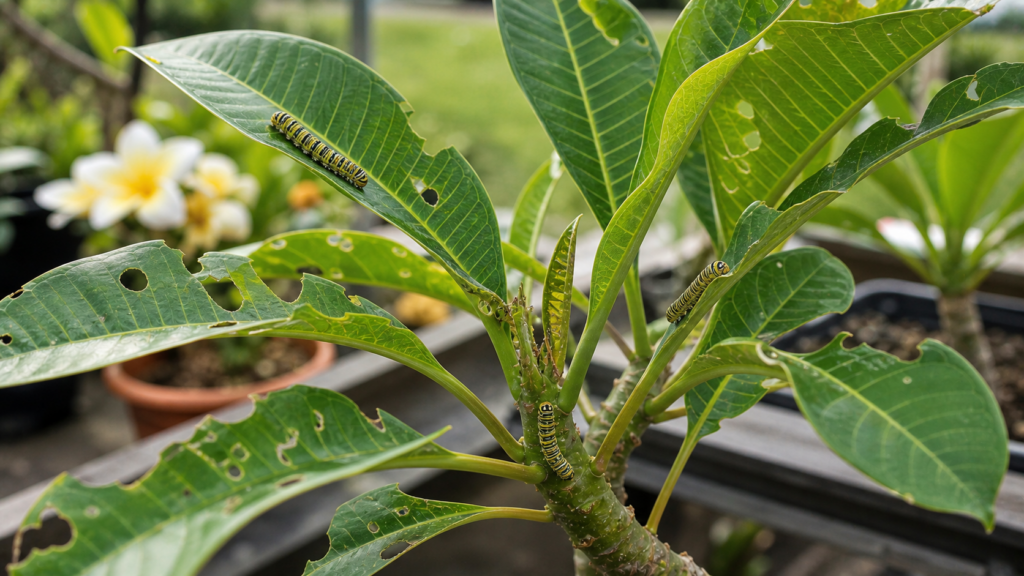
Frangipani caterpillars can defoliate plumeria quickly, but the right response starts with confirmation.
This course teaches students to recognize feeding damage, find caterpillars and early stages, remove and contain the pressure, and re-check before damage repeats.
The course avoids treating every chewed leaf as the same pest problem. Students learn to connect leaf damage, frass, timing, and visible caterpillars before acting.
Treatment logic stays proportional: small plants and light pressure may need hand removal and cleanup, while severe active pressure calls for faster containment and closer follow-up.
Course Outcomes
- Recognize frangipani caterpillar feeding damage and rapid defoliation patterns.
- Find caterpillars by checking undersides, stems, hiding places, and early stages.
- Use hand removal and cleanup when pressure is limited.
- Match the response to plant size, infestation level, and new flush vulnerability.
- Plan re-inspection and prevention to reduce repeat outbreaks.
Course Lessons
- What Feeding Damage Looks Like
- Finding the Caterpillars
- Containment and Removal
- Treatment Logic
- Follow-Up Checks
Related CareGuide Reading
- Identifying Frangipani Caterpillar Damage on Plumeria – Use for course-level damage recognition
- Frangipani Caterpillar Life Cycle and Seasonal Patterns – Use for season and repeat-check context
Learning Note
Use these readings as supporting references after you complete the PlumeriaWay observation steps. Confirm the caterpillar evidence first, then match the response to plant size, pest pressure, and follow-up findings.