How to use this course: Already enrolled or purchased? Log in through My Courses & Account. Still choosing where to begin? Start with Find My Phase or browse the Course Guides. Some courses may appear closed until enrollment is opened or your account is connected.
Course Overview
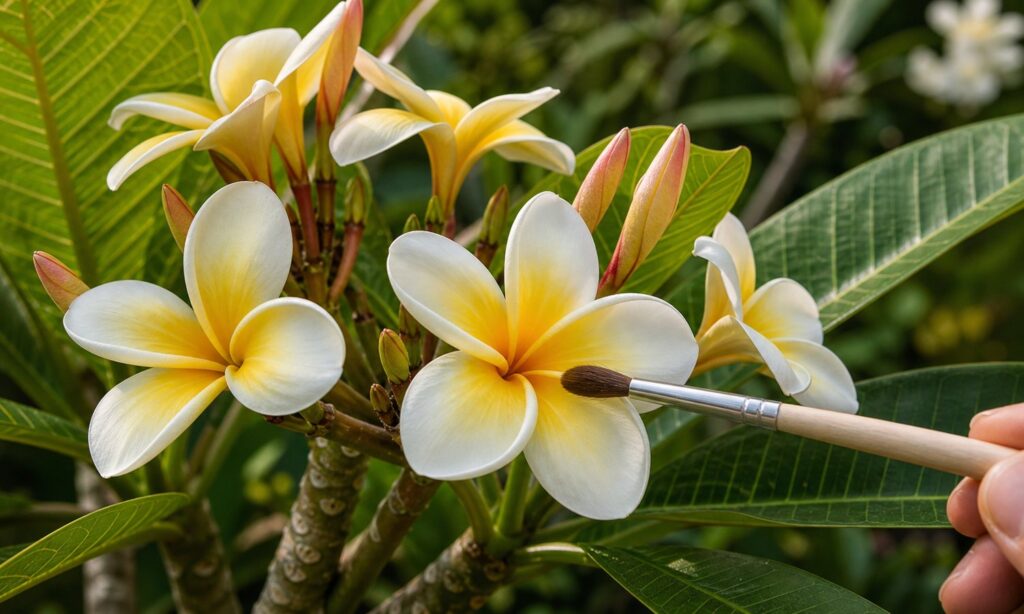
Pollinating plumeria flowers is a patient, low-force process. Success depends on flower readiness, plant strength, timing, gentle handling, and realistic expectations. A pollination attempt can be worthwhile, but it should not be treated as a guarantee of seed pod formation.
This course teaches students when pollination is worth attempting, which flower structures matter, how timing affects the attempt, and what to do after the attempt. The goal is careful observation and clean record keeping rather than repeated disturbance.
This course stays separate from seed pod development. Pollination is the attempt. Seed pod development is the long observation period that may or may not follow.
Course Outcomes
- Decide whether a plant and bloom are ready for a pollination attempt.
- Identify the flower structures involved in a careful attempt.
- Choose a timing window that protects flower freshness and plant condition.
- Label and record attempts without repeatedly disturbing the flower.
- Know when to stop, wait, and monitor for possible pod set.
Course Lessons
- When Pollination Is Worth Attempting
- Flower Structures That Matter
- Timing a Pollination Attempt
- After Pollination
- Pollination Checklist
Related CareGuide Reading
- The Best Time to Pollinate a Plumeria Flower (Plumeria Seedpod, Seed and Seedling Guide)
Key Takeaway
Pollination rewards preparation and restraint. Attempt only when the plant and flower are ready, label the attempt, and then wait without repeated disturbance.