
How to use this course: Already enrolled or purchased? Log in through My Courses & Account. Still choosing where to begin? Start with Find My Phase or browse the Course Guides. Some courses may appear closed until enrollment is opened or your account is connected.
Course Overview
Repotting should solve a real container, root, media, or drainage problem. It should not be used as a reflex response to every slow plant or yellow leaf.
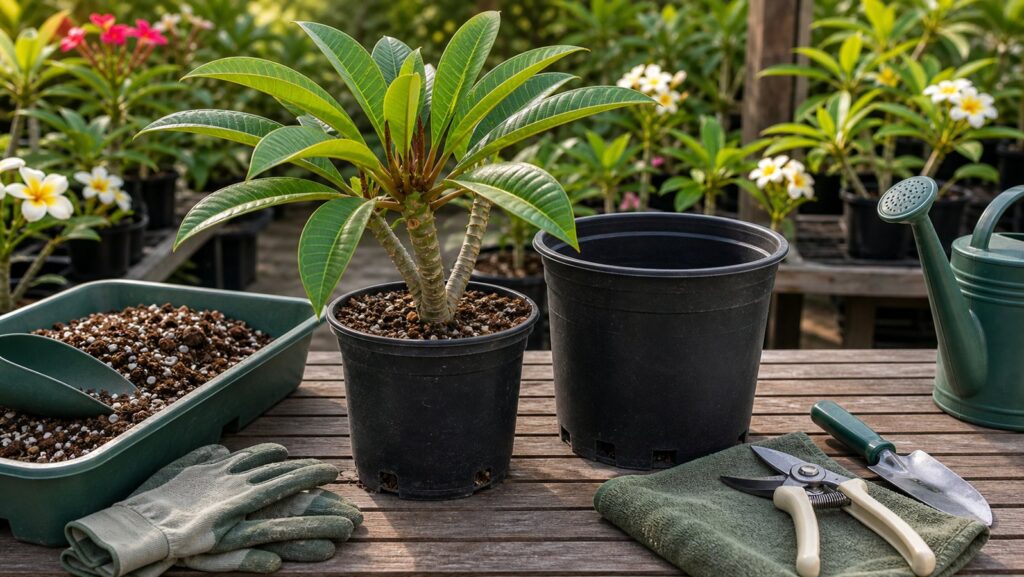
This course teaches students when repotting is justified, how to choose the next container, how to protect roots during the move, how to water afterward, and how to monitor recovery.
Safe repotting is conservative. The goal is to preserve root function, avoid oversized wet containers, and give the plant time to stabilize before adding more changes.
Course Outcomes
- Identify root crowding, drainage, and media conditions that justify repotting.
- Choose a container size and drainage setup that match the plant and climate.
- Handle the rootball, planting height, and backfill without suffocating roots.
- Water carefully after repotting and avoid rot after root disturbance.
- Monitor recovery, delay fertilizer until the plant is stable, and judge success from plant response.
Course Lessons
- When a Plumeria Should Be Repotted (B2)
- Choosing the Next Container (B2)
- Repotting Technique (B2/B3)
- Watering After Repotting (B4/S3)
- Managing Transplant Recovery (S3)
Related CareGuide Reading
- Root-Bound Plumerias: When and How to Repot Your Plant (Plumeria Traits and Characteristics Guide)
- How to Repot a Mature Plumeria without Stress (Plumeria How-To Guide)
Key Takeaway
Repotting should solve a real root-zone problem. Choose the smallest safe change, protect the roots, water carefully, and let recovery stabilize before adding more inputs.