
How to use this course: Already enrolled or purchased? Log in through My Courses & Account. Still choosing where to begin? Start with Find My Phase or browse the Course Guides. Some courses may appear closed until enrollment is opened or your account is connected.
Course Overview
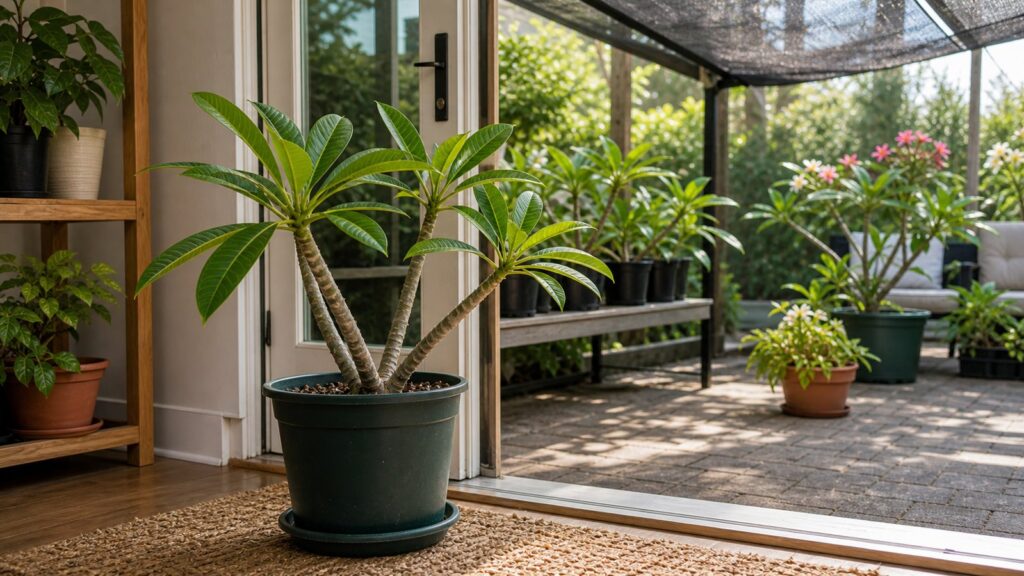
Moving plumeria outdoors in spring is an acclimation process. A plant that has been indoors, shaded, dormant, or protected can be damaged by sudden sun, wind, rain, cold nights, or a fast change in watering.
This course teaches students how to read the weather window, harden plants gradually, adjust watering after the move, and use a first-week checklist. The goal is to help the plant adapt without stacking too many changes at once.
This course follows dormancy and wake-up care. It assumes the plant is stable enough to begin outdoor exposure, but it still teaches students when to pause or move the plant back under cover.
Course Outcomes
- Explain why indoor or protected plumeria need gradual outdoor acclimation.
- Read temperature, rain, wind, and sun conditions before moving plants outside.
- Use a shade-to-sun progression instead of placing plants directly into full exposure.
- Adjust watering based on outdoor dry-down after the move.
- Use first-week observation points to decide whether to continue, pause, or shelter the plant.
Course Lessons
- Why Transition Matters
- Reading the Weather Window
- Hardening Up Plumeria
- Watering During Transition
- Transition Checklist
Related CareGuide Reading
- How to Transition Plumerias from Indoor to Outdoor (Climate & Environment Guide)
- Getting Your Plumeria Ready for the Great Outdoors (Seasonal and Regional Care Guide)
Key Takeaway
Spring outdoor transition works best when exposure increases gradually. Read the weather, start with shelter, relearn dry-down, and move back under cover when conditions or stress signs call for it.