
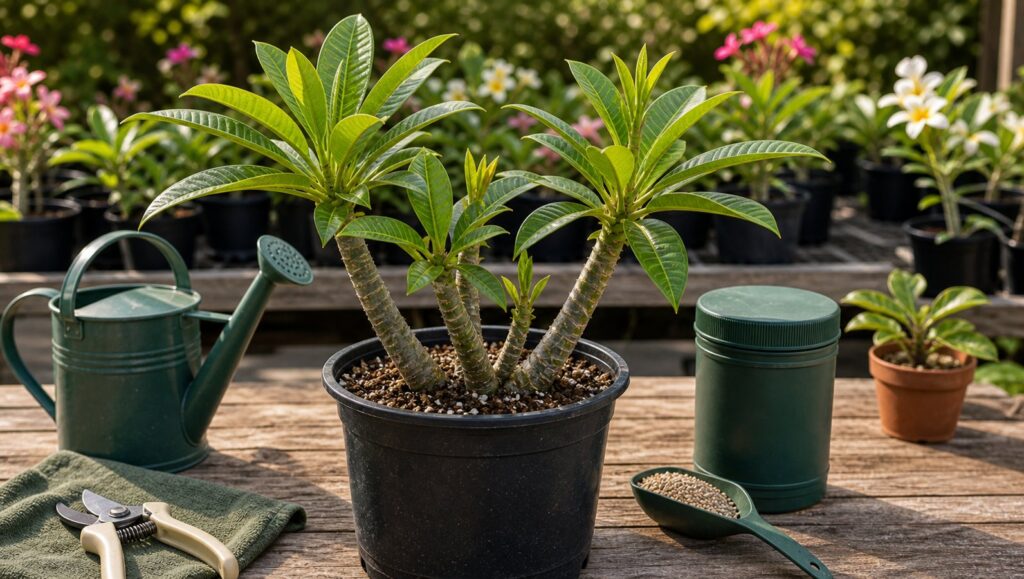
How to use this course: Already enrolled or purchased? Log in through My Courses & Account. Still choosing where to begin? Start with Find My Phase or browse the Course Guides. Some courses may appear closed until enrollment is opened or your account is connected.
Course Overview
Fertilizer timing is a judgment skill. Plumeria should be fed when it is active, stable, warm enough to use nutrients, and able to move water through the root zone.
This course teaches students when feeding helps, when it hurts, how to choose a safe feeding window, how to mix and apply fertilizer safely, how to watch for salt or stress, and how to build a simple feeding plan.
The course keeps fertilizer in its proper role. Fertilizer supports healthy growth, but it does not fix dormancy, cold roots, rot, pests, transplant shock, or every yellow leaf.
Course Outcomes
- Explain why growth and stability should come before fertilizer.
- Choose a safe feeding window using active growth, season, climate, and plant condition.
- Apply fertilizer with cautious dilution, spacing, and product-form decisions.
- Recognize early salt or fertilizer stress and pause feeding when needed.
- Build a simple feeding plan that starts low, observes response, and adjusts gradually.
Course Lessons
- When Feeding Helps and When It Hurts (B5/F1)
- Choosing a Safe Feeding Window (B5/F1)
- Mixing and Applying Fertilizer Safely (B5/F1)
- Watching for Salt and Stress (F3)
- Building a Simple Feeding Plan (B5/F1)
Related CareGuide Reading
- When Should I Fertilize My Plumeria? (The Plumeria Beginners Guide)
- When to Start Fertilizing Plumeria in Spring (The Plumeria Beginners Guide)
Key Takeaway
Fertilizer should support active, stable growth. Wait through dormancy or stress, start conservatively, avoid stacked changes, and pause when salt or burn signs appear.